From delivery visibility to governance: how teams surface risk before enforcing rules / agreements
Over the past quarter, we spent dozens of hours talking to engineering leaders across different levels of maturity — from fast-growing startups to highly regulated teams.
The conversations were consistent, and at times uncomfortable. Engineering Managers immediately understood the pain Warestack was trying to solve. They live in pull requests, incidents, and delivery bottlenecks every day. But they rarely make the buying decision.
What CTOs and VPs told us was clear: they don’t come looking to “buy governance”, “add quality gates”, or “change how teams work”.
Those things feel risky. They signal friction, disruption, and organizational drag.
What they do buy is visibility.
The Real Buying Trigger: Visibility That Feels Familiar
Leadership teams already pay significant amounts for delivery visibility today.
Many rely on:
- survey-based tools
- manually assembled reports
- spreadsheets exported before board meetings
- dashboards built from partial or delayed data
Not because these approaches are ideal — but because they produce numbers and charts leadership understands.
What was missing wasn’t intent. It was a low-friction way to surface delivery signals directly from the systems where work already happens.
That realization forced us to rethink our entry point.
Starting With Signals, Not Rules
Warestack now starts with read-only, zero-setup visibility.
No enforcement. No workflow changes. No blocking checks.
We ingest delivery signals from tools teams already use — GitHub, CI/CD, project management, Slack — and surface them in a way leadership can immediately consume.
You can see:
- what’s changing
- where risk is accumulating
- why delivery slows down
- which teams or services need attention
All without asking engineers to do anything differently.
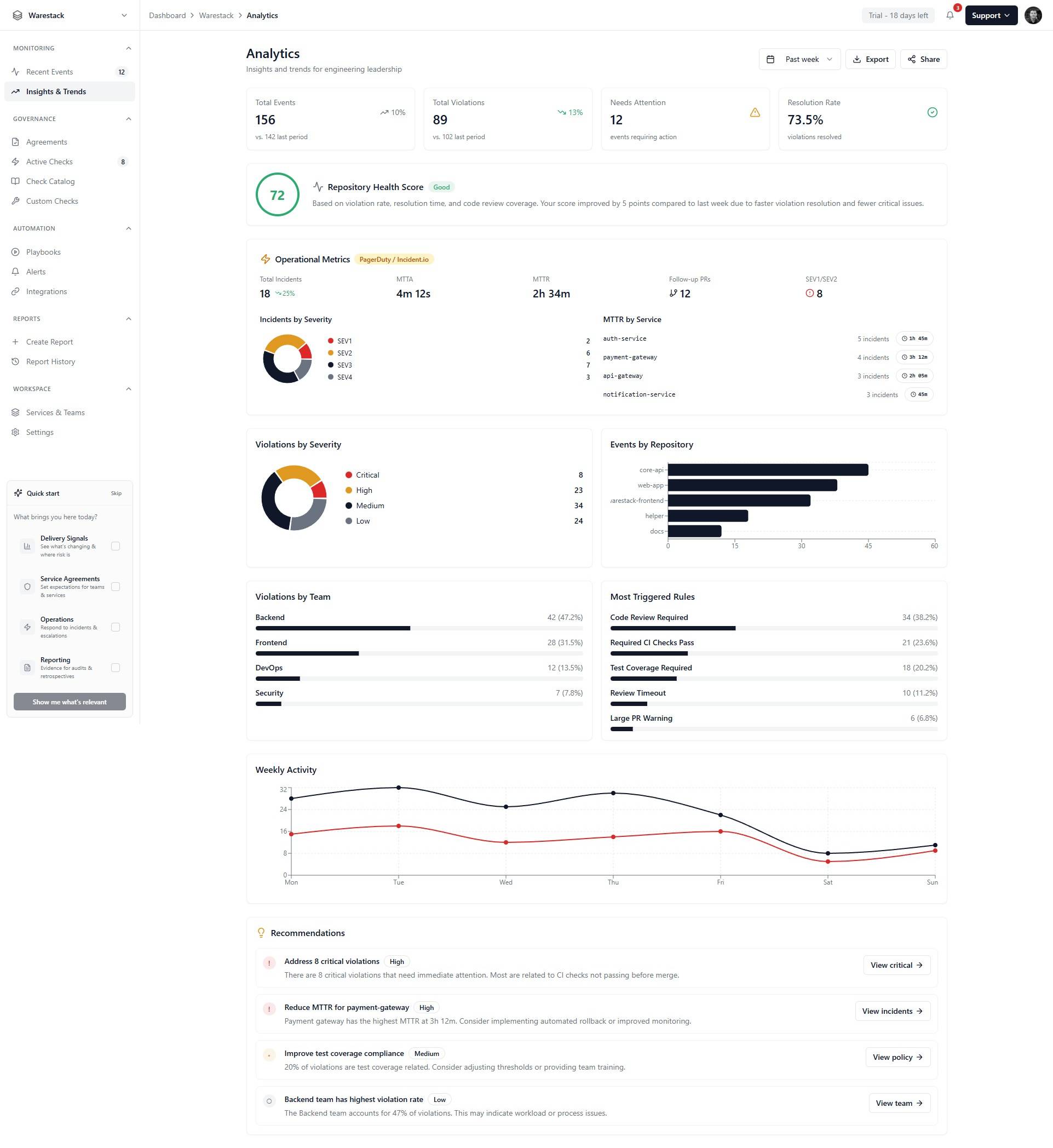
This is intentional. Trust is earned through clarity, not control.
Turning Activity Into Answers
Raw events don’t help leadership. Answers do.
That’s why Warestack translates delivery signals into:
- metrics
- trends
- risk assessments
- recommendations
And increasingly, into reports created in human language.
Instead of stitching together dashboards, leaders can ask questions like:
- “Which PRs bypassed review last month?”
- “Where are SLAs being breached?”
- “Why did lead time increase this week?”
And get structured, exportable answers.
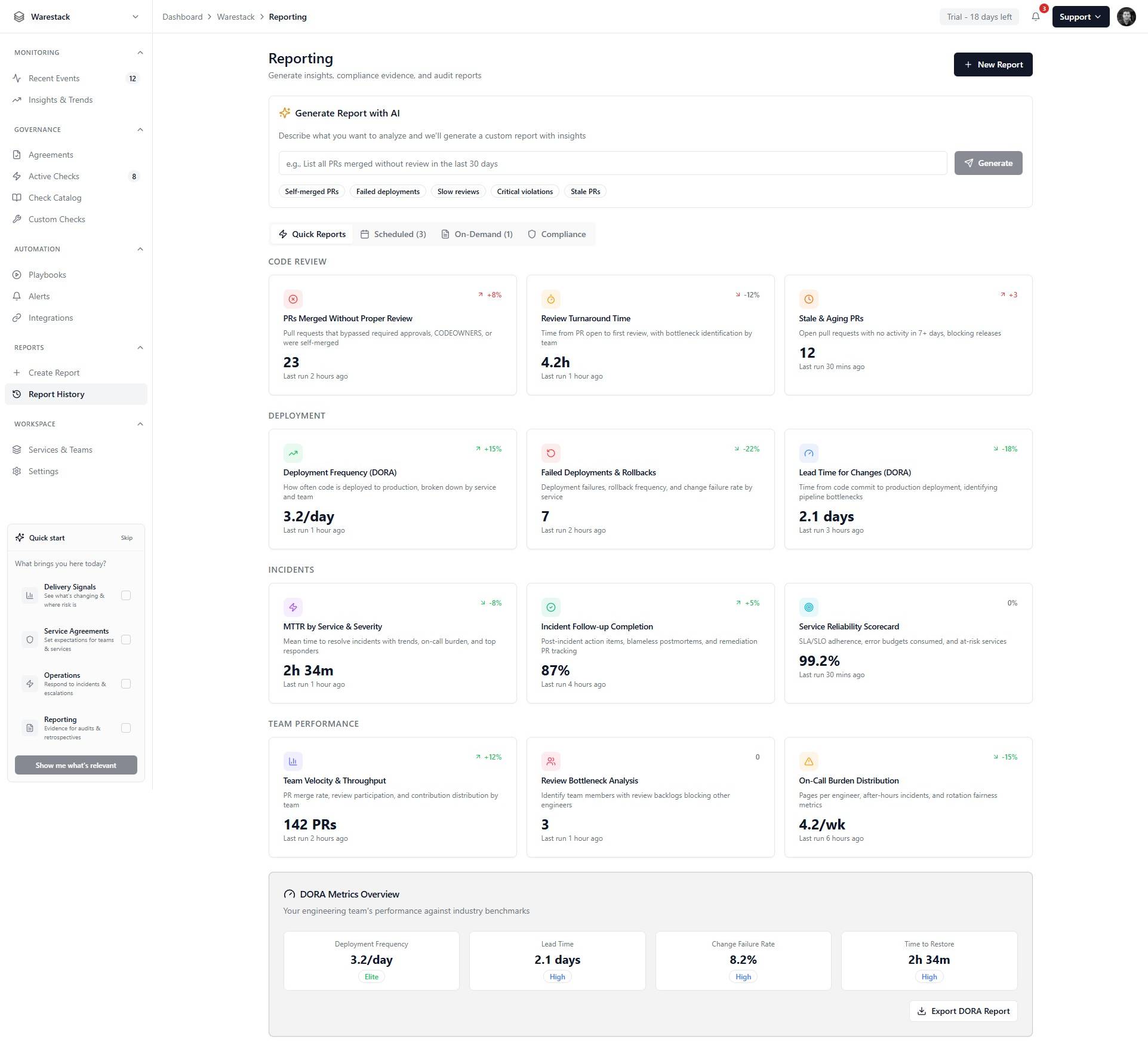
This is where immediate ROI shows up — not months later, but on day one.
Signals First, Governance When It Adds Value
Once visibility exists, governance becomes a choice, not a mandate.
Teams can progressively introduce:
- protection rules
- delivery agreements
- SLAs and tier-based expectations
- auditability and evidence tracking
But only where it makes sense.
Warestack treats governance as a second-order layer — built on top of shared context and proven signals, not imposed upfront.
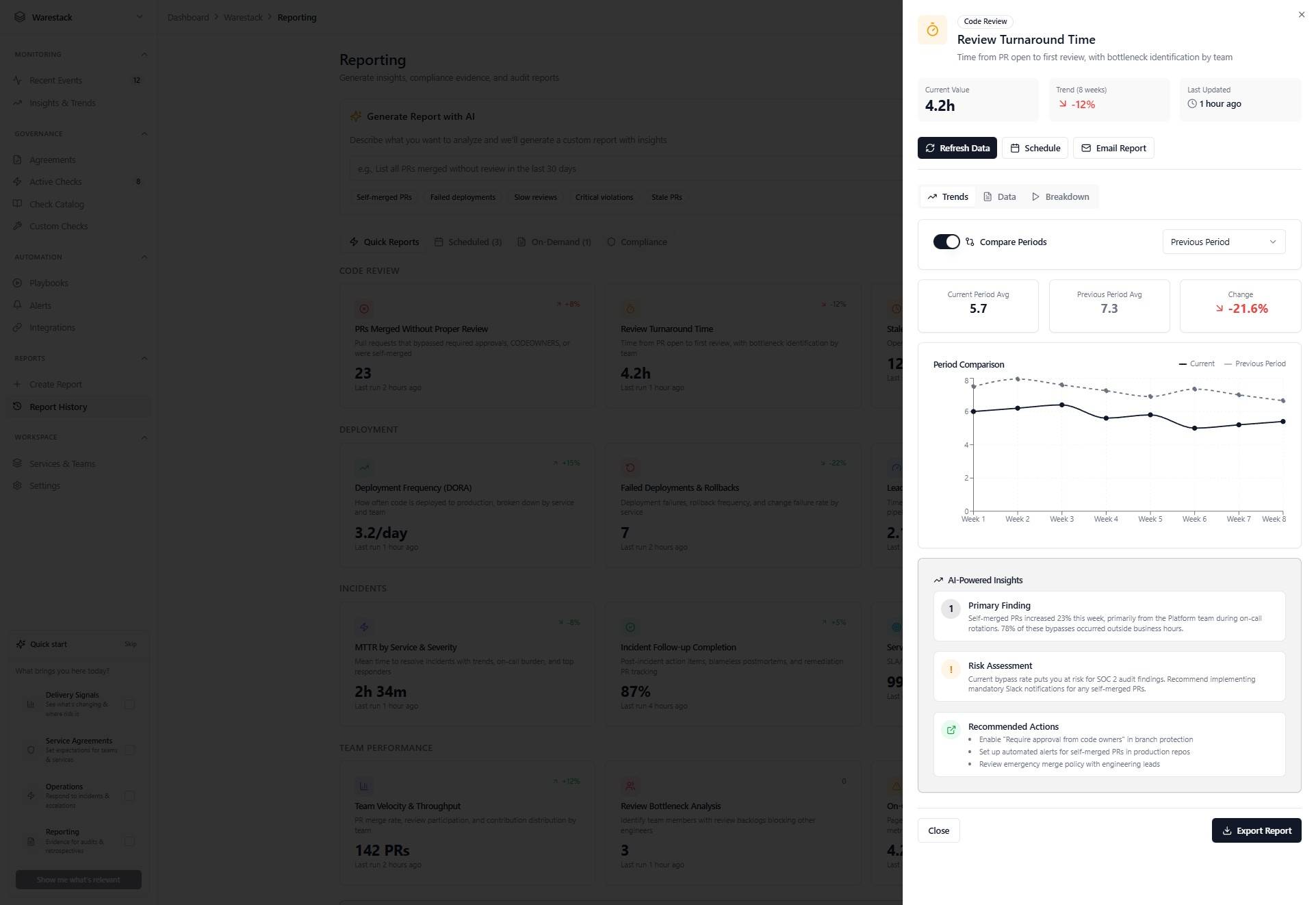
This approach reduces resistance, preserves developer autonomy, and gives leadership control only when it delivers measurable value.
Integrations as Context, Not Coupling
Another important shift was how we think about integrations.
Warestack doesn’t replace tools like PagerDuty, Incident.io, or AI code review assistants. Instead, we treat them as contextual inputs.
That means:
- runtime incidents enrich delivery risk
- AI code review signals inform change understanding
- audit tools consume evidence, not raw activity
Warestack sits above the stack, correlating signals rather than owning execution.
What This Changed for Us
This shift reshaped how we:
- build the product
- onboard customers
- price and position Warestack
- talk to decision makers
Visibility earns trust. Trust enables governance. Governance only works when teams are ready.
If you’re building dev tools, platform tooling, or anything that touches software delivery, this is worth reflecting on.
Process change doesn’t sell. Clear signals do.